Searching for new perspectives and fostering courage – that’s Best in Design. Every year, the competition highlights the work of young authors under 30 and helps them establish themselves in an international context. This year’s selection of finalists shows what current Product & Industrial Design, Communication Design, Fashion Design and Service Design look like in the hands of the upcoming generation.
The winner and the final ranking of the finalists will be announced on Saturday, May 9, 2026 at the Best in Design Awards Ceremony.
Product & Industrial Design
This section maps innovative approaches in designing everyday objects, furniture solitaires, interior solutions and complex machines and devices.
Product & Industrial Design Jurors: Agnieszka Bujas, Marek Kuźmiński, Anna Marešová
Oliwia Śnieg
Project: FLOW – Early detection of oil pollution in surface waters
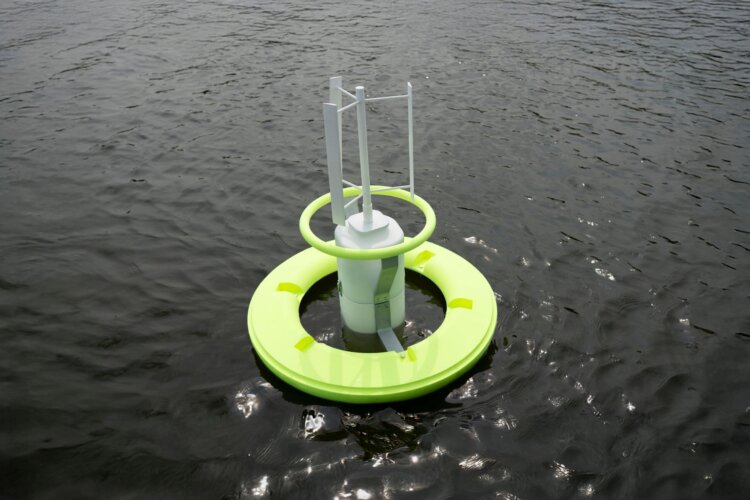
A comprehensive tool for continuous monitoring of surface water status that responds to the need for faster identification of ecological threats. It includes a network of sensors for real-time data collection and a digital platform that visualizes and interprets the measured values. The developed solution allows experts to more effectively analyze trends and anomalies, while providing the lay public, such as fishermen or families near the water, with easily accessible information about the safety of a specific stream. The project thus connects technological surveillance with strengthening social responsibility towards water resources.
Marie-Magdaléna Kvěch Jiřenová
Project: Dinner set for seniors Vita
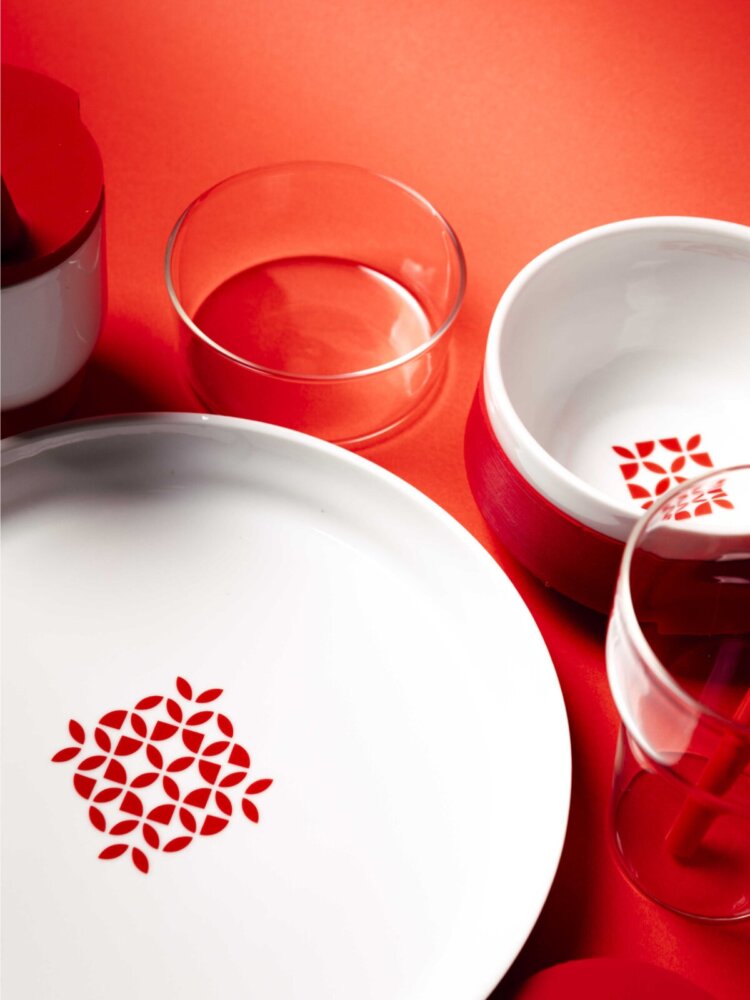
The dinner set is a comprehensive set of dishes made of porcelain, glass and silicone, which responds to the specific physical and psychological needs of seniors and people with limited mobility. The set includes ergonomically shaped plates and bowls with raised edges for easier scooping of food, lightweight borosilicate glass cups and variable silicone accessories that can be adapted to the individual limitations of the user. A distinctive element is the use of contrasting red color to support appetite and facilitate orientation for people with visual impairments, complemented by traditional decor that fulfills a motivational and haptic function. The developed solution, supported by testing in a geronto suit and consultations with doctors, offers an aesthetic and full-fledged alternative to commonly used plastic products in the care sector.
Balazs Kisgyorgy, Rebeka Csiby-Gindele, Zsófia Zala, BlankaTimari, Eszter Hanko, Roberta Wende, Laura Schillinger, Viktoria Dawson-Vadasz a Flora Lukovics
Project: Fragments
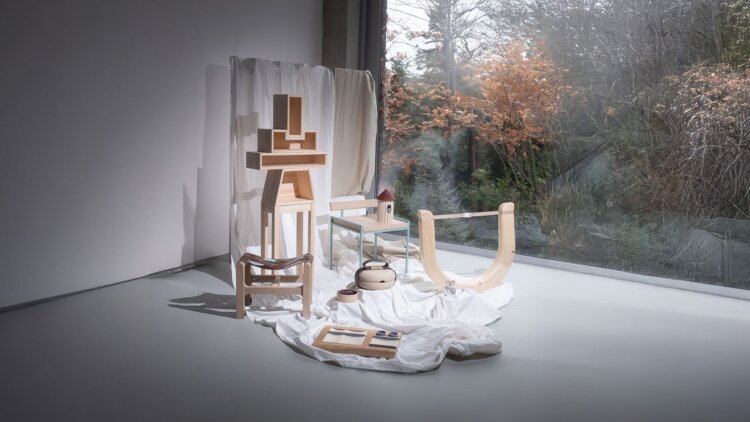
Fragments is a collection of furniture and functional objects that explore the depth of Central European identity and traditions. The project combines modern manufacturing processes with respect for local material culture, with each object – from modular display cases to contemporary interpretations of traditional containers – carrying a personal story or family memory. The developed solution emphasizes context and narrative, transforming ordinary everyday objects into a means for a deeper understanding of shared values and cultural roots. Participation in international shows underlines the ambition of the entire collective to represent regional aesthetics on a global scale and inspire reflection on what heritage we pass on to future generations.
Communication Design
This category brings together projects from the fields of graphic design, illustration, new media and intermedia. It includes everything from visual identities to digital animations and web interfaces.
Communication Design Jurors: Dan Zucco, Dalibor Itze, Kamila Štěpničková
Huda Narmouq, Maryem Grich a Hande Nur Han
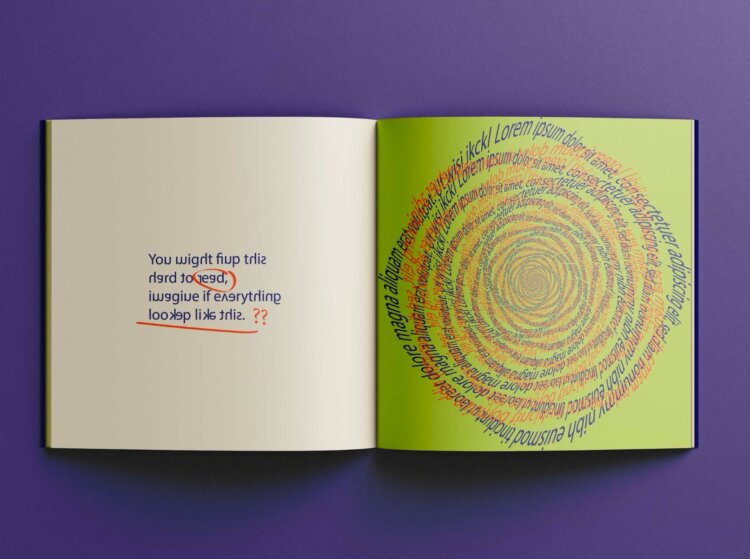
Project: Mind Map – Experiencing Dyslexia Through Visual Communication
The authors’ project in the field of visual communication focuses on the issue of dyslexia. The main output is the experiential book Through Their Eyes, which combines theoretical explanations with visual simulations of reading difficulties. The publication is divided into two parts – the first uses clear typography and high contrast for a clear presentation of facts, while the second section, through font deformation and disruption of the text flow, conveys to the reader an authentic feeling of the barriers that dyslexics face. The developed solution serves as an educational tool for parents and educators, which uses design instead of mere theory to strengthen empathy and support an inclusive approach in education.
Dayana Kaska, Jan Kaska a Aneta Beranová
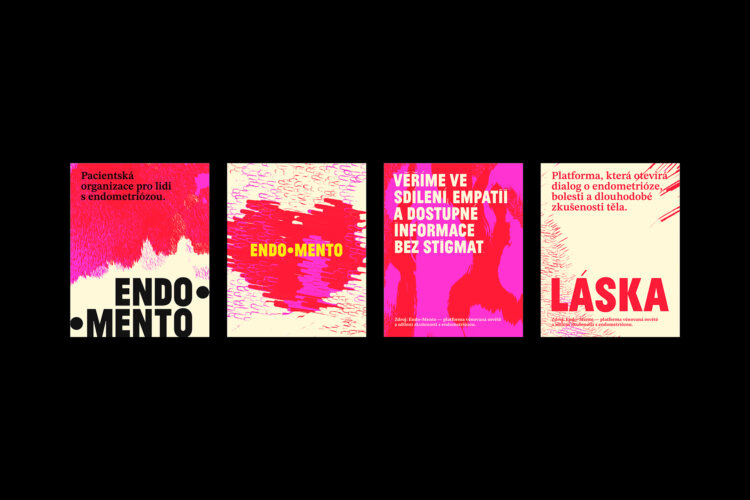
Project: Visual identity of the Endo•Mento project
Endo•Mento is a visual identity and digital platform focused on educating people about endometriosis and destigmatizing this chronic disease. The core of the visuality is an interactive illustration generator that uses creative coding and Perlin noise to transform microscopic images of cellular structures into expressive digital images. The developed solution combines a bold color palette with clean typography and offers an interactive web interface that allows users to explore women’s health issues in a new context through generative art. The project thus serves as a communication tool that connects personal experience with modern technologies and opens up a space for public discussion on previously overlooked health topics.
Anna Lukášová
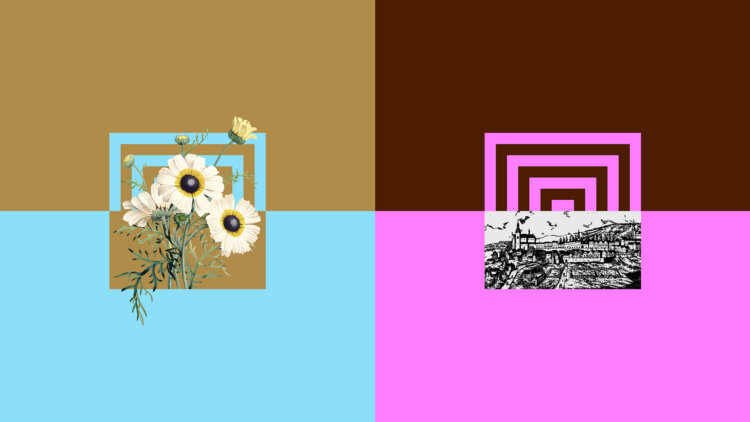
Project: Visual identity of the Municipal Museum and Gallery of Svitavy
The visual identity of the Svitavy Municipal Museum and Gallery represents a comprehensive communication system that connects the historical legacy of the institution with its current character. The central element of the graphic solution is a logo symbolizing the silhouettes of three museum buildings, which through layering and multiplication create a labyrinth motif – a reference to the exhibition of Svitavy stories. The developed visual language consciously distinguishes itself from interchangeable visuals and replaces them with a self-confident identity that increases the clarity of communication across printed and digital media. The benefit of the design is a functional and long-term sustainable graphic manual that allows the institution to reach younger generations and families with children, thus strengthening its position as a modern cultural platform.
Fashion Design
The category presents creations in the fields of clothing, textiles, footwear, accessories and jewelry. It focuses on collections that combine craftsmanship with new materials and visions.
Fashion Design Jurors: Daria Dembicka, Milan Flíček, Zuzana Vrábeľová
Tilen Gorenjak
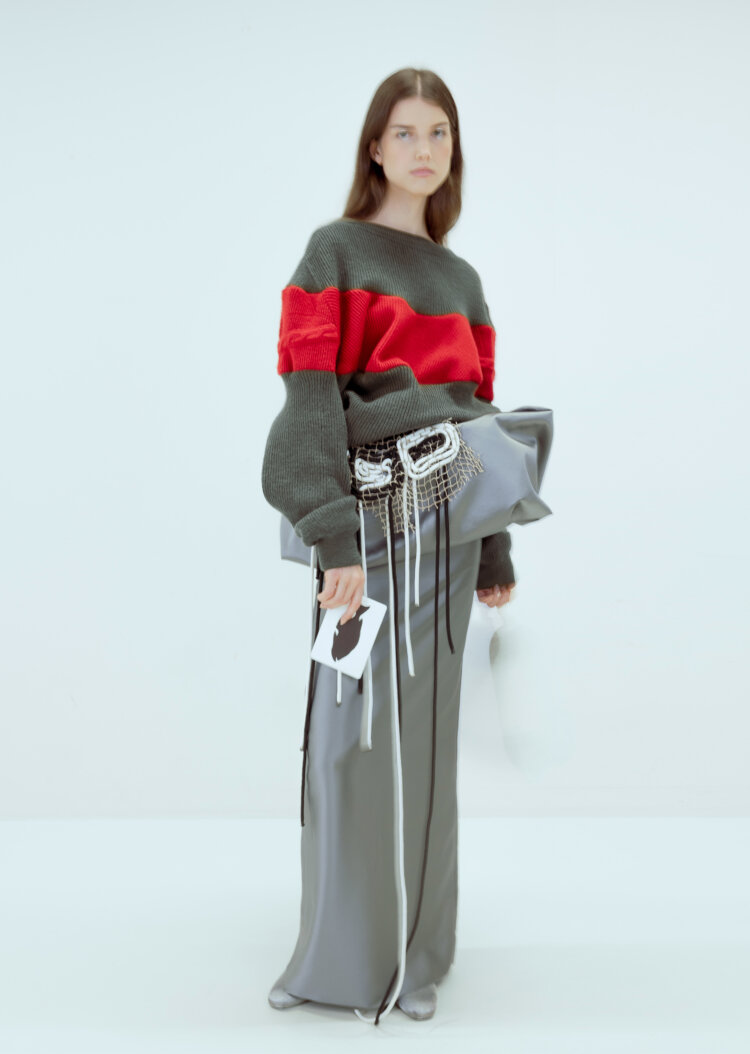
Project: Ms Crawford Goes Fishing
Ms Crawford Goes Fishing is a haute couture collection that explores the contrast between the world of classic Hollywood glamour and the rugged aesthetics of fishing. The main feature of the collection is the use of unconventional materials, namely discarded fishing nets and waste ropes, which are transformed into voluminous, technically demanding silhouettes through authorial weaving and interlacing techniques. The designed concept demonstrates the symbiosis between sustainability and high tailoring, while blurring the boundaries between feminine delicacy and the functional robustness of men’s elements. The project thus offers a modern view of luxury fashion, where innovation does not only come from technology, but above all from the redefinition of traditional crafts and the use of industrial waste in a new, artistic context.
Silvia Berecká
Project: Spore-gasm
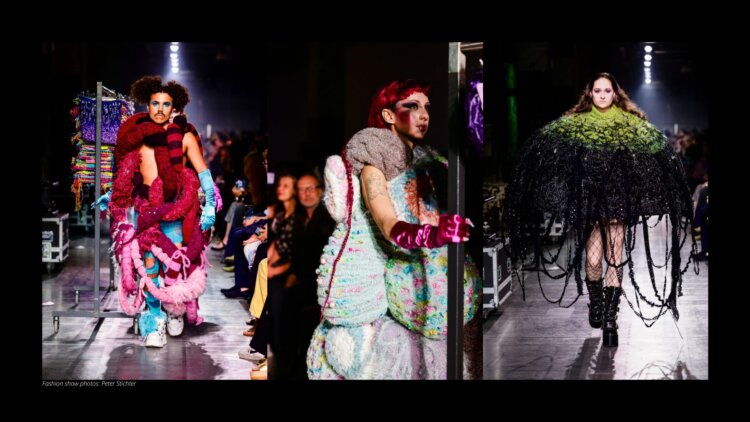
A fashion collection that uses the fascinating shapes and colors of mushrooms as a symbol to celebrate the diverse forms of gender identity in the queer community. The collection pushes the boundaries of conventional fashion through richly decorated knitted, woven and crocheted textiles inspired by the aesthetics of poisonous mushrooms and the unrestrained nature of drag culture. This author’s work pays tribute to the resilience of queer individuals and, through its strong visuality, encourages confident self-acceptance and rejection of binary stereotypes. The entire body of work thus functions as a celebration of freedom and joy, transforming natural motifs into a bold manifesto of visual emancipation and playfulness.
Adele Hamsund
Project: Aging Gracefully
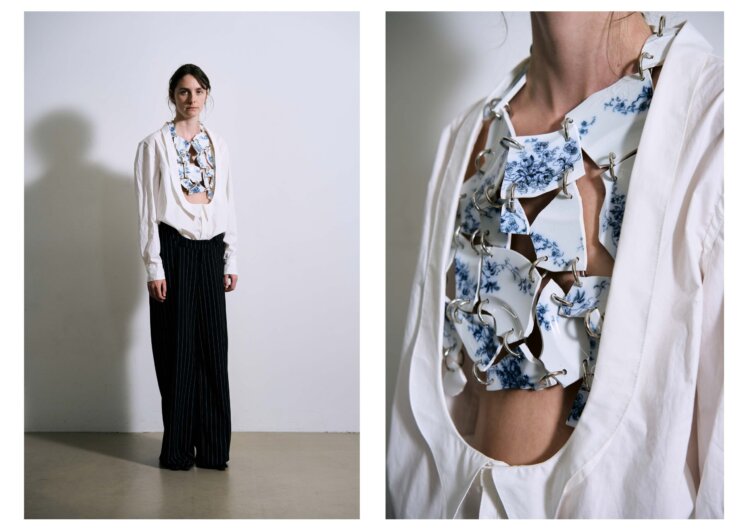
A critical fashion collection that reflects the current pressure on youthful appearance and social fear of aging in women. The author’s work seeks parallels between the historical ideal of beauty from the late 19th century, represented by the so-called “Gibson Girl”, and today’s trends in aesthetic medicine, such as preventive botox in young girls. The entire collection of clothes uses design as a means to deconstruct unattainable standards of beauty and encourages a reassessment of the relationship to one’s own body and the natural processes of aging. The project thus opens a discussion about feminist values in the context of the modern cosmetics industry and the importance of authenticity in the digital age through textile forms and visual metaphors.
Service Design
The category focuses on innovations in providing services. It includes designs of complex processes, technologies and interactions that improve the user experience and streamline the functioning of systems.
Service Design Jurors: Janka Csernák, Karolína Menclerová, Matěj Káninský
Diksha Ashok, Noora Yasmin, Karina Lang, Maria Luisa, Alisa Mahat, Smriti Sarath & Ahsan Sajjad
Project: The Red Connect Portal
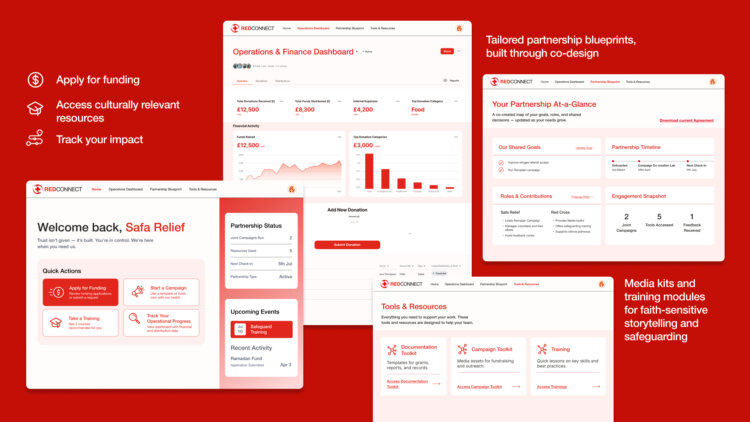
An innovative model of cooperation in the humanitarian sector that focuses on strengthening trust and partnership between large institutions and local community organizations. Through service design tools, the platform redefines relationships so that large entities, such as the Red Cross, can effectively support grassroots charities without violating their autonomy or cultural values. The proposed system reduces the administrative burden on small organizations, increases transparency of the impact of their activities, and ensures a fair exchange of resources and information. The project thus shows how service design can transform the institutional approach from control towards support and care, thereby ensuring more dignified and culturally sensitive crisis assistance directly at the point of need.
Diksha Ashok
Project: The Lived Lens Toolkit
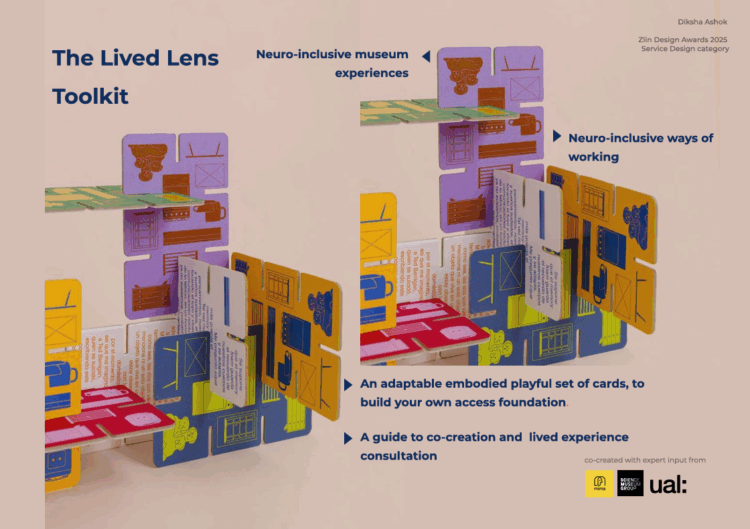
The Lived Lens Toolkit is a methodological tool for service design aimed at radically improving the accessibility of museum and cultural spaces for neurodivergent visitors. Instead of passive compliance with regulations, the project promotes the active involvement of people with ADHD, autism or dyslexia directly in the creative process as experts on their own experience. The presented set of tools allows curators and exhibition designers to integrate cognitive accessibility in the early stages of planning, thereby preventing sensory overload and barriers to orientation. The project thus initiates a systemic change in institutional thinking – moving accessibility from a formal add-on to a fundamental principle of inclusive design that increases the quality of experience for all groups of visitors.
Afreen, Jeungeun Yoo, Kate Masters, Eugenia Camargo Hoyos a Mariam Almuheiri
Project: You Belong Here: A project tackling the crisis of absenteeism in UK schools
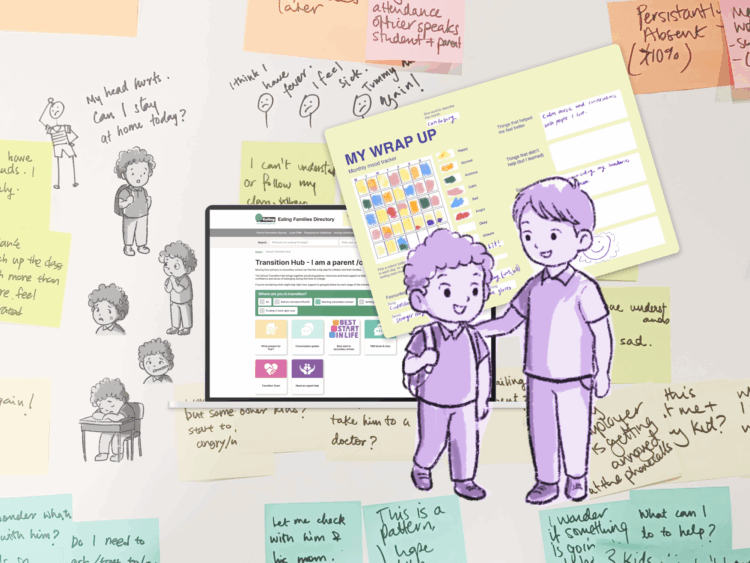
You Belong Here responds to the growing crisis of absenteeism in British schools, particularly the phenomenon of Emotionally Based School Non-Attendance (EBSNA) during the transition between primary and secondary education. The core of the proposed concept is the creation of a so-called Transition Team – a group of older students who, as trained mentors, help newly arrived students build a sense of belonging and security through shared activities and a system of “buddy” support. The set of measures is complemented by a new educational plan for strengthening psychological resilience in 6th grades and a digital interface, the Transition Hub, which provides parents and teachers with structured guidance during critical stages of adaptation. The whole system is thus moving from repressive sanctions to preventive, community-led care that addresses psychological barriers to attendance before they become irreversible.